Petrovice and
Ústí nad Labem
"Then the road rose upward."
"Then the road rose upward."
Stage two, passing through...
Petrovice is a Czech village a kilometre south of the border with Germany, a scant 22km south of Pirna. Its historic German name is Peterswalde, the name Seume uses in the account of the Stroll to Syracuse.

Our inn at Peterswalde was as good as one could ever wish with proper modest contentment. The customs officer who stamped my passport was friendly. The meal was not bad, and the maid—most charmingly neat and pleasant.
Seume appears happy in Peterswalde — a welcoming inn, a good meal, a relaxed official and a pretty Bohemian maid all make for a good start to his travels in the Habsburg lands.
A decade later, however, the scene was very different. In September 1813, during his final German campaign, Napoleon passed through Peterswalde. The historian F. Loraine Petre describes the dismal scene:
At Peterswalde the Emperor lodged at the house of the parish priest; all the other inhabitants had fled.
All Saxony was ruined by the constant advance and retreat of the tide of war; the part adjoining the Bohemian frontier was perhaps the worst; for within the last few weeks the allies had advanced and retreated through it twice, and the French the same.
There was no forage for the horses, the frontier villages were entirely destroyed.
By then, Seume had been dead for three years, his hopes of a better world with Napoleon had died several years before.
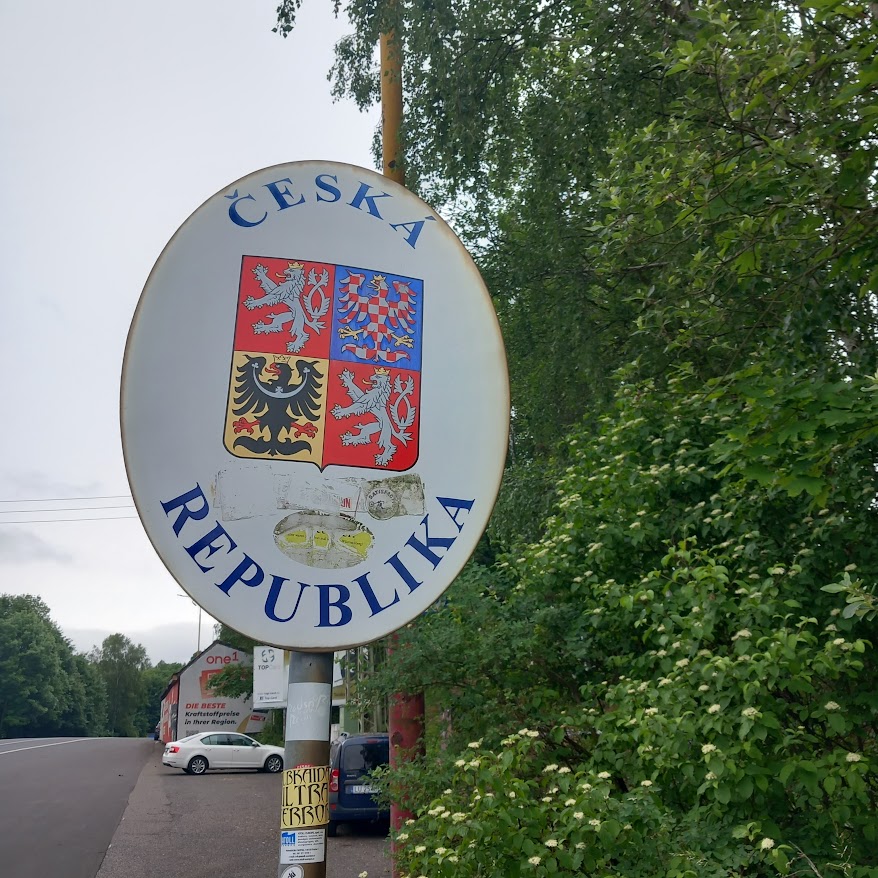
I cross the border, the first time I've physically stepped across a border. I went back and forth a few times, just to see how that feels. There was no passport control, no customs.
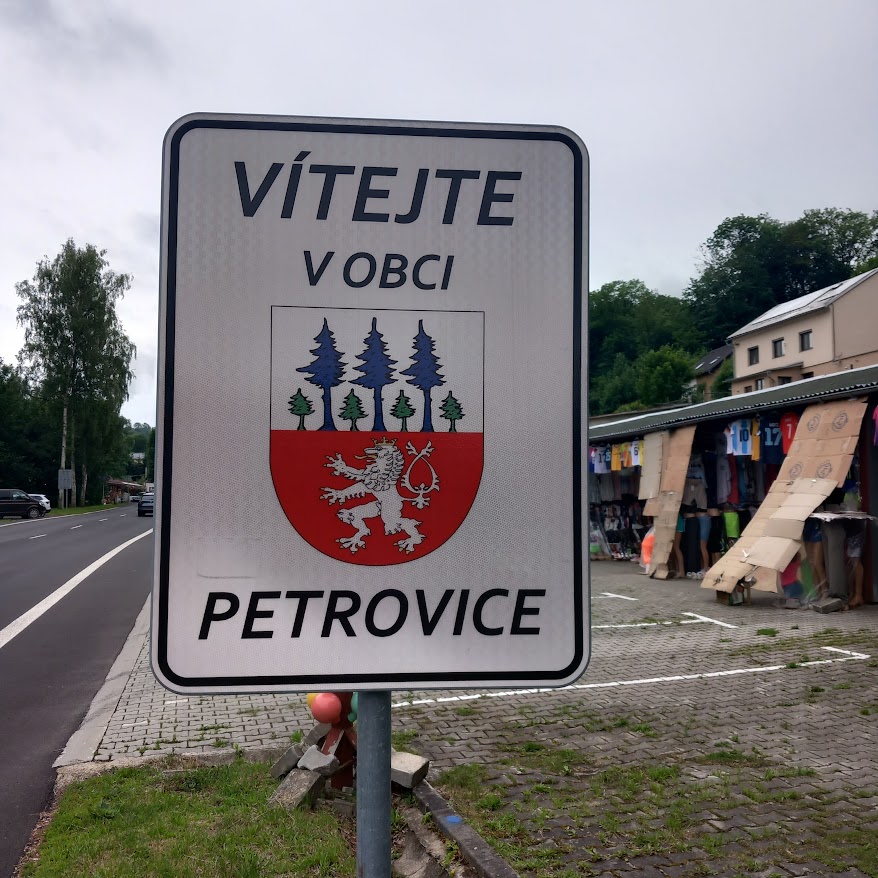
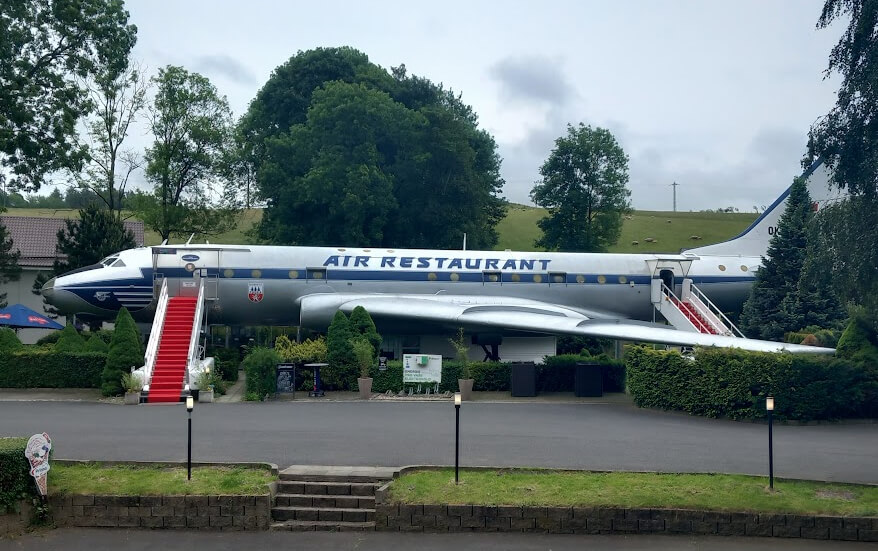
200 years later, Petrovice is a quiet village, lined with shops selling alcahol, ciggaretes and miscellaneous tat to German tourists.
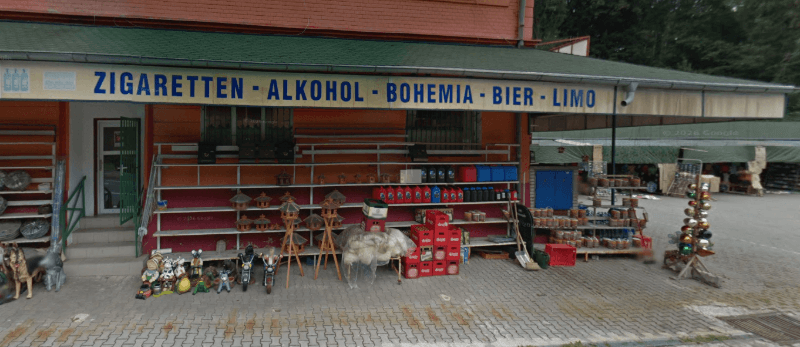
The only thing of interest is the Air Restaurant based in a Tupolev Tu-104.
It was mid morning and I wasn't hungry. I had planned to follow Seume's example and have a hearty lunch but I decided against it and instead caught a bus to Usti nad Labem.
Before I continue I just want to plug the Czech IDOS transport app. I found it useful throughout my entire trip. Easy to use and very reliable, you can buy bus or train tickets. Highly recommended.

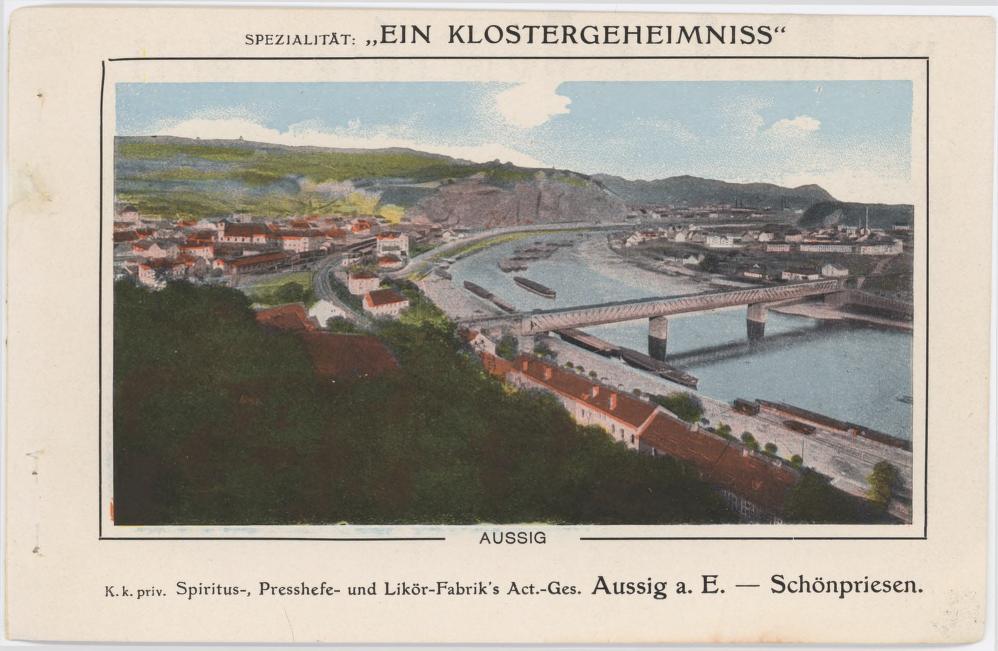
Ústí nad Labem is a city in north-west Bohemia, on the River Elbe, Labe in Czech, approximately 25 km south-west of Petrovice.
The city was an important industrial and river port, closely linked to the North Bohemian coalfield. This heritage has scarred the city somewhat, one wouldn't call it a beautiful place.
The road from Peterswalde to Aussig is rough but beautiful; from Aussig, where one rejoins the Elbe, romantically wild, with high mountains rising left and right along the river, full of ravines, cliffs, and sharp peaks.
In Seume's time, Usti (then Aussig) was still a small riverside town and it was only during the later part of the 19th century that it began to develop as an industrial center
British linguist and Sanskrit scholar, Arthur Anthony Macdonell, passing through in 1890, described Aussig as ‘odious’.
Aussig is the great coal harbour of Bohemia. Huge barges are moored a long way down the bank, and lines of railway trucks are drawn up in front of them continually disgorging their swarthy contents. Bohemian coal seems to be of a peculiarly soft and grimy nature.
Aussig is far and away the ugliest port of Seaboard Bohemia.
And James Baker in 1894 while noting the downside is upbeat on the river and crusing opportunites.
We have caught a glimpse of the Elbe again, by which we entered Bohemia, and a very short run indeed brings us across its waters to the busy town of Aussig and here we are almost in the Black Country of Bohemia, in the heart of the coal and iron district. Aussig itself is dirty and noisy. Smoke and steam and coal-dust speak of its importance to the commerce of Bohemia, but a day can well be spent in its neighbourhood, and frequent steamboats on the Elbe allow the traveller to escape in the evening.
The images above are from Dresden und die Sächsische Schweiz (1904).
I didn't stay long in Usti, which is a shame. I like cities the guidebooks suggest avoiding, I like cities by rivers, I like a gritty working class industrial city but I was in and out within 90 minutes. I started off at the tourist information office and picked up map and postcard. My aim was to find the Elbe and walk along it a short way, see the river port, grab a glass of beer. But on the way down I took passed by the train station and saw an information board that dislayed information with my train to Teplice set to leave in ten minutes. I made an instant decision to buy a ticket and catch the train, which I did.
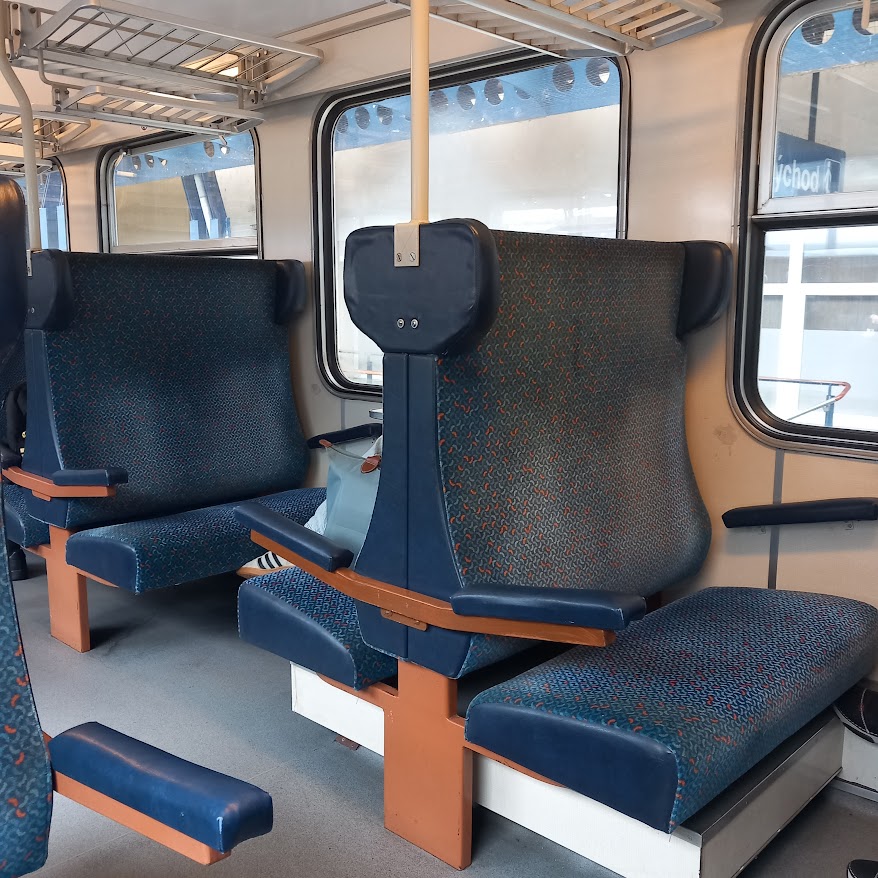
The train interior was attractily old fashioned and reminded my of the Britisth Rail carriages that used to take my sister and I to see our nan in Sidcup, south London, in the 1970s.
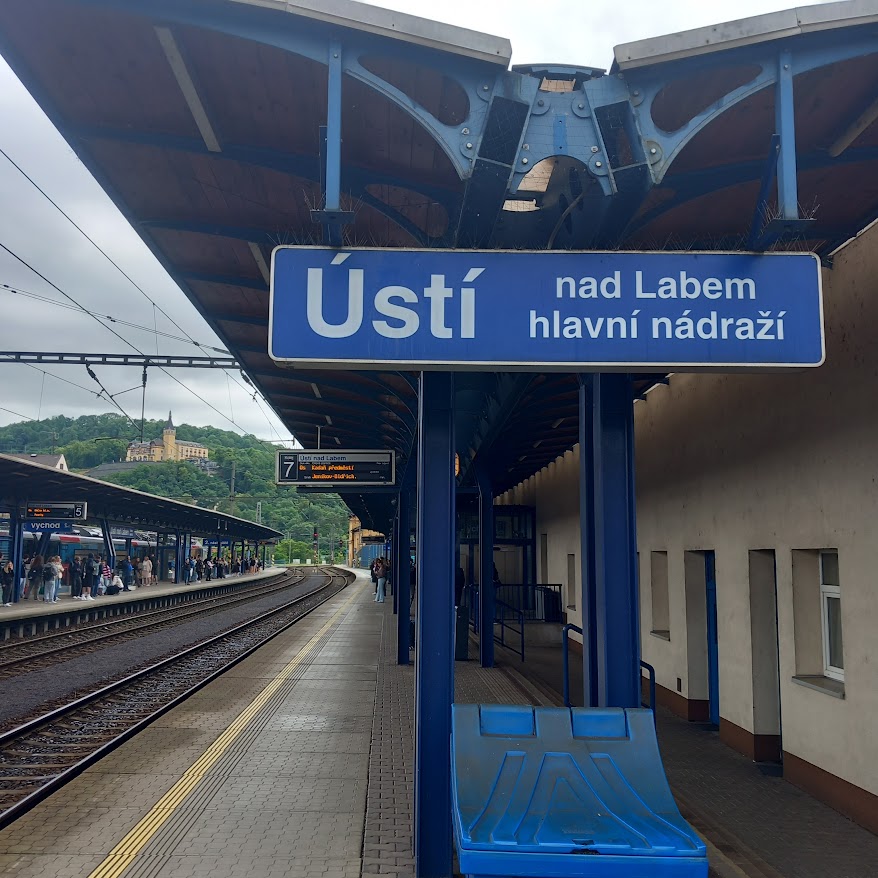
A few minutes later the train pulled out of the station and I got my view of the Elbe, the industrial landscape along its banks above which perched the castle of Hrad Střekov (you can see the castle in the first image above).