Lovosice and Litoměřice
"...the Bohemian-German dialect as far as Lowositz is rather agreeable"
"...the Bohemian-German dialect as far as Lowositz is rather agreeable"
Stage three

"At Lowositz the mountains gradually come to an end"
Lovosice, known as Lowositz and Lobositz in German, is an industrial town on the banks of the river Elbe.
In Seume's time, it was a small market town, surrounded by vineyards and fertile farmland. Seume does not tarry here, he appears to be in a hurry, pressing onwards to Prague.
James Baker reports from 1894 that:
"Lowositz is a somewhat modern town now belonging to the Schwarzenbergs(1) whose castle is one of the principal buildings; but it is modern, for with nearly the whole of the town it was burnt down in 1809(2). The town lies in the centre of the great fruit district of the Elbe, and in the month of May all the sloping meadows around it are gay with cherry and apricot blossom, that contrasts delightfully with the green grass and the sombre yet winter russet pine and the soft emerald green of the fresh leaf of the birch."
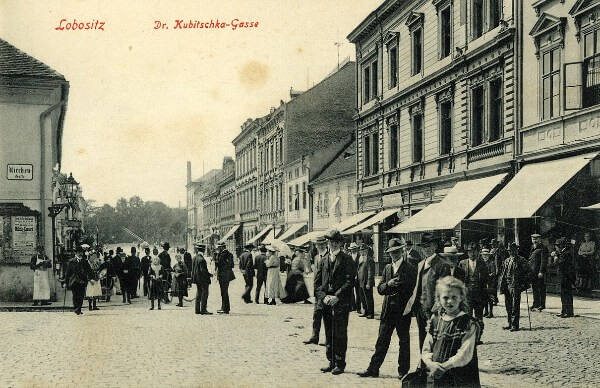
The town appears to be thriving in 1907, as shown in this postcard.
Historically, Lovosice is known for the Battle of Lobositz, fought on 1 October 1756, the opening land battle of the Seven Years' War in Europe.
On a happier note Lovosice has the good fortune to be situated in the wine producing region of Bohemia close to the village of Velké Žernoseky on the right bank of the Elbe which hosts a number of vineyards.
In his 1981 memoir 'All the Beauties of the World' Czech writer and poet Jaroslav Seifert sets the scene:
"But let me return once more to those few moments at the vineyard in Žernoseky!
An unlovely serving girl in a red-and-green dirndl brought us not only buttered sardines, but also an excellent wine; or rather, I should say, downright lovely white wine. Professor Pražák declared it a gallant gift. The girl blushed very nicely and it suited her well. Oh, if only she had not later become a Nazi!
My friend František Čebiš used to say of the wine from Žernoseky that it was the wine which, of all the wines our country produces, has the most delicate bouquet. And Čebiš, after all, understood such things."
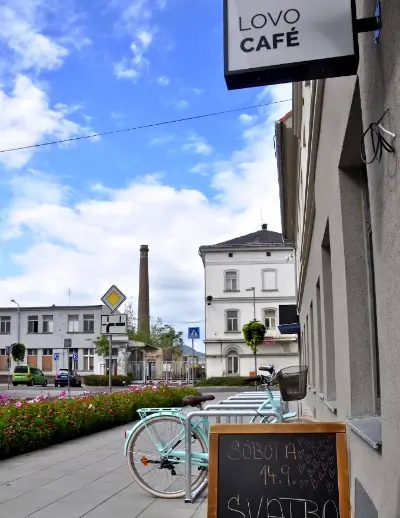
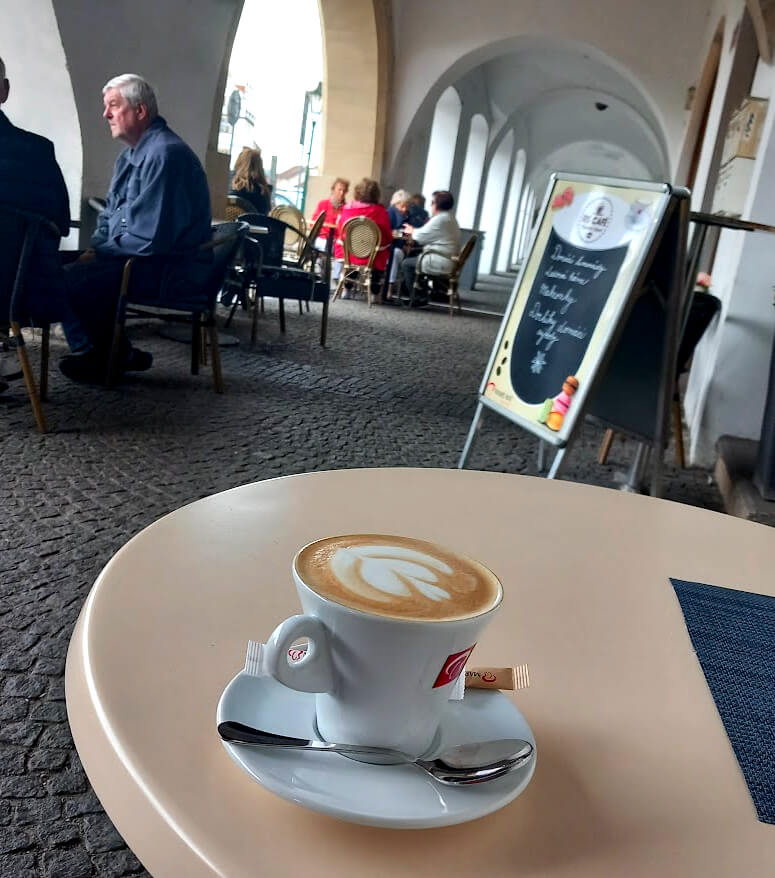
Like Seume, I did not linger in Lovosice. I dropped into the tourist information to buy a postcard and had a chat with the staff. I asked for the best coffee sport in town and they directed me to the Lovo Cafe, a nicely laid out establishment, rather trendy, probably where the hep cats of Lovosice congreate. I enjoyed a rather milky cappucucino. From there I walked back to the train station and continued my journey on to Litomerice
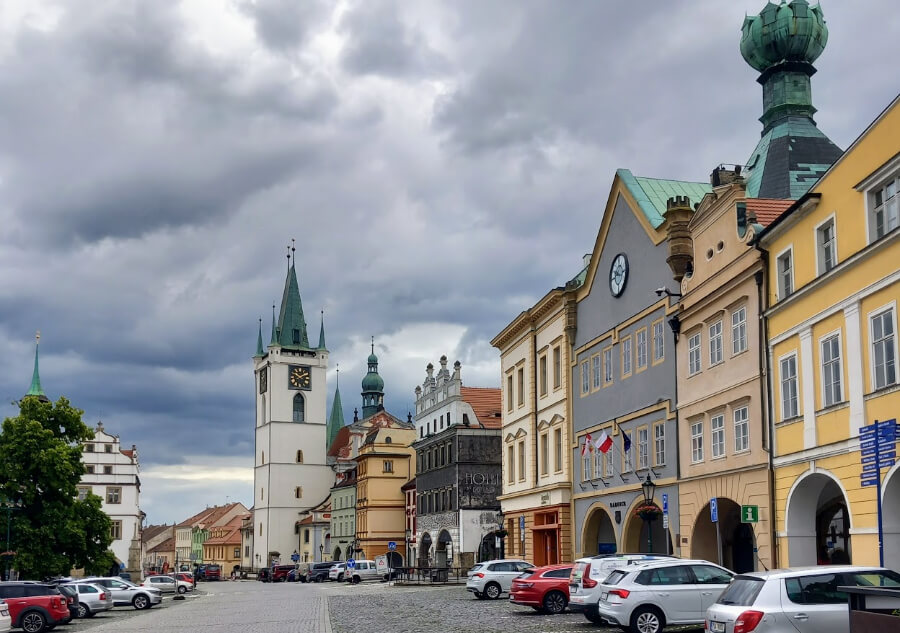
Litoměřice is a historic town in north-west Bohemia, set at the confluence of the Elbe and Ohře rivers, 17 kilometres south-east of Ústí nad Labem. The town was known in German as Leitmeritz.
Seume makes no reference to Leitmeritz in his book, we've no evidence that he even passed through the town. I, however, after some reseach, decided I liked the look of the place. Litoměřice dosen't have the industral background of its close neighbour Lovosice, and from what I could see from photos its historical centre was still intact. So I booked myself into a AirBnB for three nights and am very glad I did so.
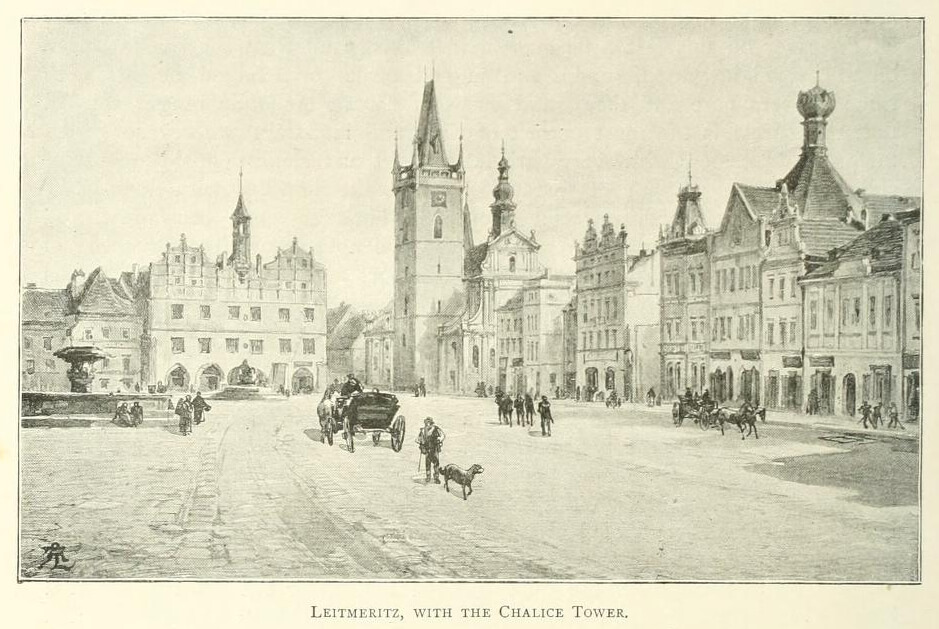
James Baker was sketching here in 1894, and to be honest the view of the main square has changed very little since that time:
Not Italy
Joseph Marshall(3), passing through in 1770 was a tad rude about the local wine:
There are some vineyards where the grapes ripen tolerably, but the wine is not drinkable to those who have been used to that which is good.
We'll have to disagree on that, I for one, was very impressed with the local white. There are a number of wine bars/cellars in Litoměřice.I settled on two quite different to each other.
Vinotéka HeiderA charming cantina as the Italians would have it. I could imagine this place existing in Seume's time. The hostess could not speak English, nor I much in the way of Czech but we managed to communicate with the help of Google Translate. I sat outside and enjoyed the excellent wine from the nearby Žernoseky vineyards.
Víno Hruška is a quiet different kettle of fish. It wouldn't be out of place in a trendy district of London except the prices were super low and the staff incredibly friendly.Oh and there were two mad little dogs who made me chuckle, I could only get a photo of one of them. The wine at the Hruška is from Moravia, which I'll be visiting in September. The host was a young woman, very knowledgeable who spoke perfect mid-Atlantic English. I let her choose my wines which I enjoyed very much indeed.
The best food I had in Litoměřice was at the Czech Pivovarský Sál and the Vietnamese Pravá Vietnamská Restaurace
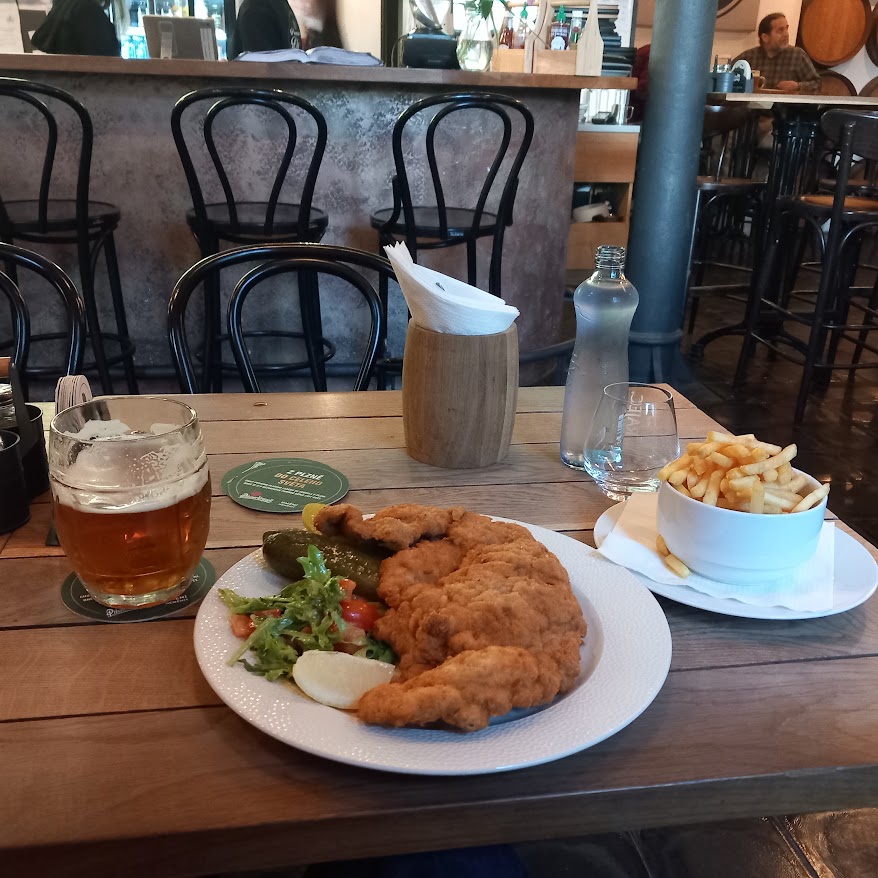
Size of that scnitzel!
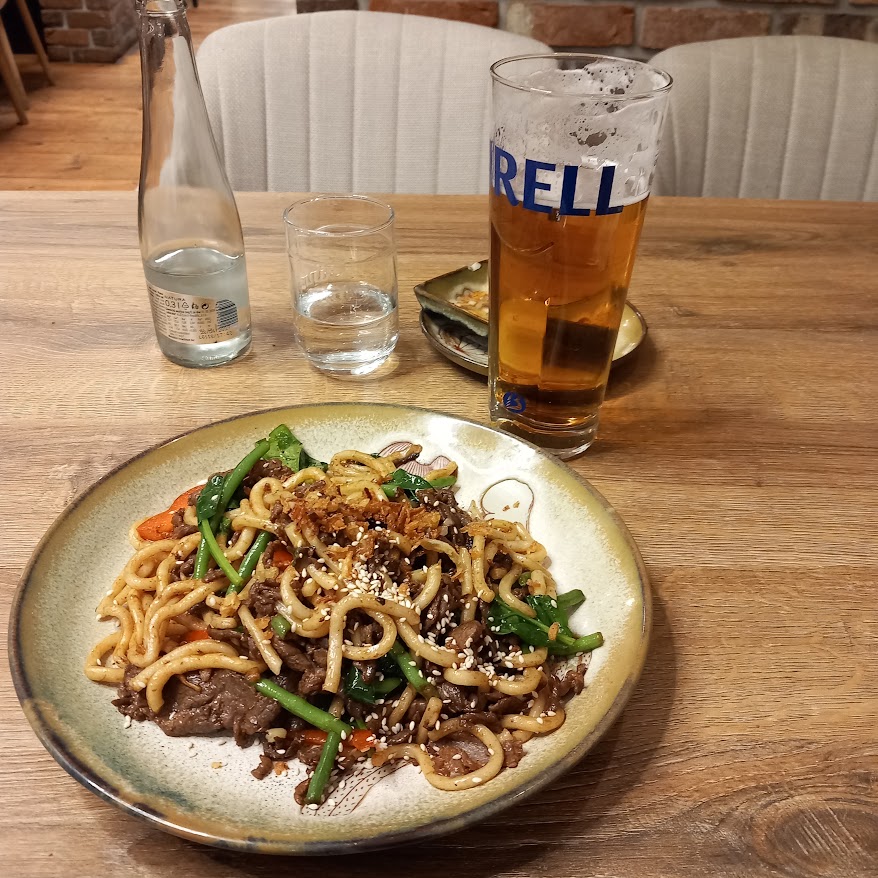
Tasty and cheap Viet food..
After all that food and drink I really needed some excersise. I walked up Radobýl hill with great views of the surrounding landscape, in this shot is Litoměřice and the Elbe.
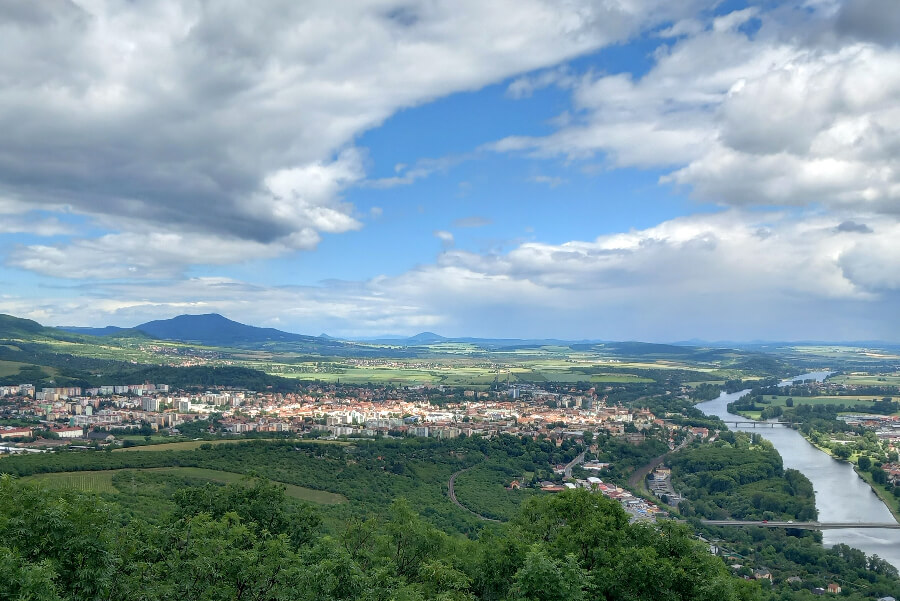
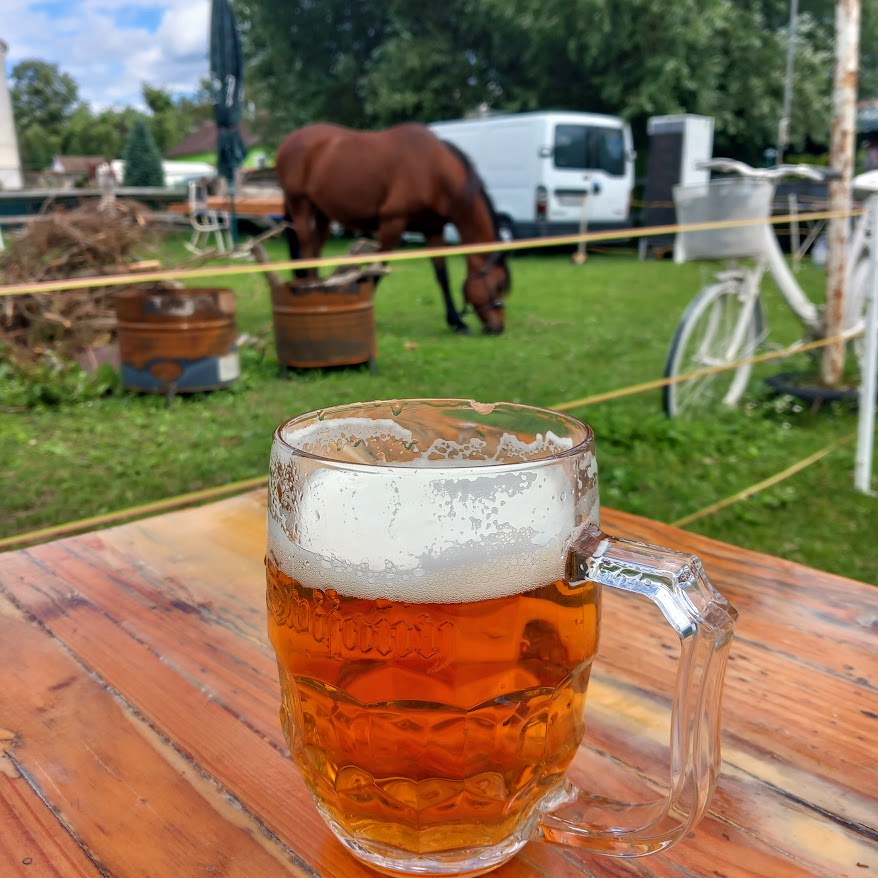
Rather than hike back to Litoměřice I decided to make my way down to the village of Žalhostice where I could catch a train back. After ascending from the hill I discoverd I'd just missed the train and the next wasn't for an hour. I took a look at Google Maps and saw a bar not far from the station. Five minutes later I was sitting outside with a tasty beer, an hour easily killed.
Most visitors to the Czech Republic head straight to Prague and will never see anything quite like a quiet provincial town such as Litoměřice. This is a shame as a day or two spent in this fine town is well worth the effort, there are a manageable amount of tourists (mainly Czechs and Germans) and accomodation, food and drink is a fraction of the cost of the capital. You really ought to visit!